Plenty of Arkansas houses built between the 1920s and 1980 have asbestos somewhere, and the siding is the usual spot. Cement-asbestos shingles were cheap and stood up to fire, so builders put them on a lot of modest places, and you’ll still find them on older houses across the state, Little Rock included. The word alone scares some buyers off. It doesn’t have to end your sale. Arkansas gives sellers more room than most states do, and the smartest move usually isn’t the one a siding contractor pitches.
What Is Asbestos Siding and How Do You Identify It?
Most people picture asbestos as fluffy gray wrap around a basement furnace pipe. On a lot of Arkansas houses, it’s the siding itself. Those hard cement shingles have outlasted two or three roofs and still shed rain just fine.
Look for rigid shingles about 12 by 24 inches, laid in overlapping rows. The bottom edge is often wavy or scalloped. Many faces carry a stamped woodgrain that looks convincing from the curb and fake up close. Knock on one with a knuckle and it rings hard like tile, nothing like hollow vinyl. Chipped corners show a gray, cement-like core, and you’ll often spot evenly spaced nail heads where the shingles came pre-punched.
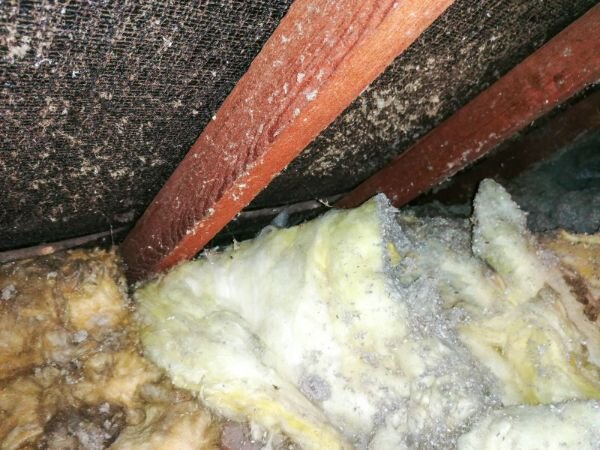
Siding isn’t the only hiding spot in older properties. I’ve pulled up enough nine-inch floor tiles to know the black mastic under them is a classic suspect. Popcorn ceiling texture, duct tape on old HVAC trunk lines and insulation jacketing on boiler pipes belong on the same list.
Nobody can confirm asbestos by eyeballing it, and anyone who says otherwise is guessing. A lab has to analyze a physical sample. Professional testing for a home usually runs $300 to $850, depending on how many areas get sampled. If your house predates 1980 and its shingles chip like a dinner plate, treat them as asbestos until a lab says otherwise. That assumption costs nothing and keeps you honest with buyers later.
Is Asbestos Siding Dangerous to Live With?
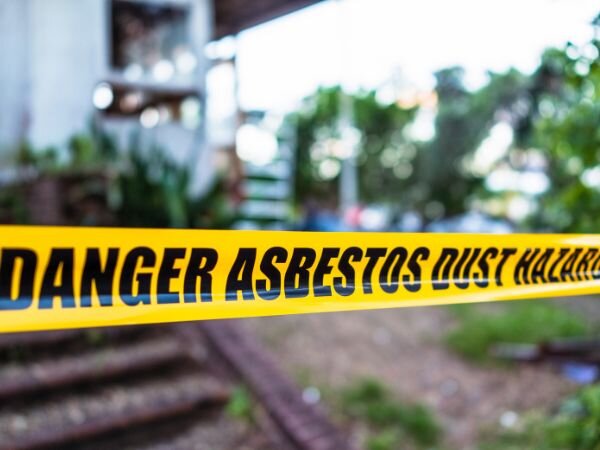
Take a power sander to those shingles and you’ll turn a quiet wall into a real health problem in no time. That’s the whole risk in one sentence.
Asbestos fibers only hurt you once they’re airborne. Bound inside cement board, they can sit inert for decades. Intact siding is what the industry calls non-friable, meaning you can’t crumble it with hand pressure. Friable material (crumbly pipe wrap, damaged ceiling texture) is the worrying category, and siding rarely qualifies unless someone’s smashed it or let it rot.
Sawing, drilling, sanding, demolition and pressure washing are the moves that cause trouble. I’ve watched sellers do more harm prepping a house for listing photos than decades of Arkansas weather ever managed. You can read more about our company and how we buy older homes as they stand.
Getting the house ready to list? Skip the pressure washer. A garden hose and a soft brush clean that old exterior well enough for photos without scouring the surface. If a contractor shows up for other outside work, tell them what’s on the walls before anyone starts drilling.
Families live safely in these homes their whole lives. A fresh coat of paint often does more good than any blasting could. If a shingle cracks, swap out that single piece instead of tearing into the wall. Keep the surface sealed and the safety question mostly answers itself.
What Are the Legal Requirements for Selling a House with Asbestos in Arkansas?
Arkansas has no seller disclosure statute. None. The executive director of the Arkansas Real Estate Commission has answered the question directly, and the answer is no. State law doesn’t make every owner disclose the condition of what they’re selling.
Courts here take caveat emptor seriously, and the burden of finding defects sits mostly with the buyer. The doctrine still has limits that trip people up. You can’t actively hide a known problem or lie when a buyer asks you straight out. Blocking an inspection is off the table too. Cross any of those lines and the as-is clause in your contract may not protect you.
Most sellers end up filling out a disclosure anyway. The Arkansas REALTORS Association’s Seller Property Disclosure form runs close to sixty questions, and agents encourage every seller to complete it. One of those questions asks point blank about asbestos. Answer it truthfully or don’t sign it. The association’s standard contract also lets buyers ask for a copy as part of an offer, so plan on someone requesting it.
Listing with an agent changes the math. Licensees answer to the Commission no matter what you decide. Under its rules, they have to make reasonable efforts to learn the facts that are material to a property’s value.
Federal law does add one mandatory step: any home built before 1978 needs a lead-based paint disclosure. Asbestos has no federal equivalent. After closing on a lot of these houses, my take is that sellers who stay quiet end up paying more. Written disclosure turns an unknown into a priced-in known. A real estate attorney will tell you the same thing for a fraction of what a lawsuit costs.
Can You Sell a House with Asbestos Siding As-is in Arkansas?
Little Rock posted a median sold price of $310,000 as of October 2026, up roughly 9.7% year over year, and median days on market climbed to 58. Asbestos siding doesn’t knock a house out of that market. You can legally sell a house with asbestos in Arkansas, and the material itself isn’t a defect in title.
Going as-is works. It just means you aren’t making repairs, and it doesn’t erase the honesty rules above. Expect the buyer’s inspector to flag the exterior as possible asbestos in the report. That note rarely sinks a sale by itself, especially when you disclosed it first and set your number with it in mind.
You’ve got three realistic paths. List on the open market, disclose in writing, and accept that some financed buyers will walk. You could also offer a repair credit at closing and let the new owner decide what to do. The third path is a cash buyer who’s already priced the condition in and won’t reopen talks after inspection. If that third path fits, here’s how you can sell your house fast in Arkansas with the siding left as it is.
Pricing is where I’ve seen sellers hurt themselves most. Knocking a full removal estimate off your asking price hands the buyer a windfall, since plenty of them just paint the siding and move on. Discount for the hassle instead of for a job nobody plans to do.
Cash buyers make the most sense when a property has stacked issues, like a dated kitchen, an old roof and inherited furniture nobody wants. That’s the lane Ready Door Homes works in, and a straight as-is offer can spare you the carrying costs of a long listing. Two months of mortgage payments, insurance and utilities on a vacant house in Pine Bluff or Jonesboro eats into whatever premium a retail sale might bring.
How Much Does Asbestos Siding Removal Cost in Arkansas?
Removal is the expensive route. Professional siding abatement generally falls between $5 and $15 per square foot, and Angi puts the national average near $2,900 for 2026. Most jobs land between $1,300 and $3,900. Bigger houses and crumbling exteriors push you toward the top of that band fast, and none of it covers the new siding you’ll need afterward.
Encapsulation is the option contractors tend to mention last. Sealing the existing shingles with a specialized coating runs about $2 to $6 per square foot, and it keeps the fibers locked where they are. The coating isn’t permanent, so it needs upkeep. For a house you’re about to sell, it’s usually the better buy. Those figures are national averages, and residential crews in smaller Arkansas towns may price jobs differently, so get two bids before you commit.
Who can legally do the work is its own question. Under Arkansas Code 20-27-1006, asbestos abatement contractors and consultants need a license from the Division of Environmental Quality before any demolition, renovation or response action. DEQ’s air quality office says most residential demolition and renovation is exempt from state asbestos regulation. Certain conditions can still pull a job back under Regulation 21. Call DEQ before anyone touches your house and confirm where your project lands.
If you spend thousands removing siding before a sale, you rarely see it back at closing. Appraisers don’t hand out a line-item credit for abatement, and buyers in this market negotiate over kitchens and roofs. Our look at whether you should replace your roof before selling your house covers the same question for the other big exterior job.
Can You Get a Mortgage on a House with Asbestos Siding in Arkansas?
Lenders care about condition far more than the word asbestos. On a residential loan, the appraiser is there to judge value and basic safety, not to collect lab samples.
What appraisers do flag is worn exterior material, such as cracked shingles, exposed substrate and peeling paint on a pre-1978 home. Government-backed loans hold properties to stricter condition standards than conventional financing. That makes an FHA or VA appraisal the place where a rough wall becomes a required repair before closing. Siding that’s intact and painted usually clears without trouble. If you’re wondering who covers those reports, here’s a breakdown of who pays for home appraisals and inspections in a typical sale.
Paying cash takes the question off the table, which is one reason dated houses tend to end up with cash buyers. Statewide, Arkansas had 19,232 homes for sale in September 2026, with a median sale price of $276,206. Homes took a median 61 days to sell, a full week longer than a year earlier. Benton County slowed more, with average days on market rising from 46 to 65 compared with September 2025.
Frequently Asked Questions
Do Realtors Have to Disclose Asbestos?
Agents carry obligations that Arkansas sellers don’t. Commission rules require licensees to make reasonable efforts to learn facts that are material to a property’s value, and known asbestos fits that description. So even in a buyer-beware state, your agent will likely put it in writing whatever your preference. Fighting that is a bad idea.
Can I Sell a House with Asbestos Siding?
Yes, and you can sell without removing a single shingle. The siding isn’t illegal, it isn’t a title defect, and it won’t block a closing. Your two real jobs are honest communication and sensible pricing. Financed buyers may balk if the material looks worn, and that’s when a cash sale starts to make sense.
What Is the 3-5-7 Rule for Asbestos?
It’s a federal sampling rule, and it wasn’t written for your house. Under AHERA, which covers schools, an inspector takes at least three samples of friable surfacing material from an area of 1,000 square feet or less. Areas between 1,000 and 5,000 square feet need five, and anything larger needs seven. Siding isn’t surfacing material, so those numbers don’t map onto your shingles. A home inspector will usually treat the whole wall as one material, since every shingle on it came from the same product run.
Should I Test Before I List?
Only if you plan to act on the answer. Testing turns “probably asbestos” into “confirmed asbestos,” and you’d then owe every buyer who asks an honest answer about it. Some sellers want that certainty. Others would rather describe the home as a 1958 build with original cement-board siding and let buyers inspect on their own dime. Neither approach is dishonest. Just don’t test, learn the result and then stay quiet about it.
Does Asbestos Siding Hurt Resale Value?
Less than people assume. Intact, painted siding reads as dated rather than dangerous, and it draws the same discount any 70-year-old exterior draws. Deterioration is what moves the number. Once shingles are cracked, missing or shedding, buyers start pricing a full re-side, and Angi puts new siding alone at $4 to $16 per square foot.
The Short Version
You can sell, and you don’t have to abate. Honest answers are the one thing you can’t skip, and your agent will likely disclose the siding anyway. Price the house for what it is and it’ll move.
If an inherited place in Benton County or a rental in Pine Bluff is sitting there because of the siding question, it doesn’t have to be complicated. Send us the address and we’ll take a look. You’ll get a number without repairs or testing, and you’re under no obligation to do anything with it. You’ll find our phone number and a short form on our Contact Us page.
Helpful Arkansas Blog Articles