
Three roofers came out, and you’ve got three bids. Not one of them is under five figures. That’s where the question of whether to replace your roof before selling usually starts, with a folder of estimates bigger than anything you’ve spent on the house at one time. I’ve bought houses with 30-year-old roofs. I’ve also bought houses where the shingles went on the month before we closed. The gap in what I paid was never the price of the roof itself.
Should You Replace Your Roof Before Selling Your House?
The answer hinges less on your shingles and more on who ends up buying the place. I’ve watched that pattern repeat across dozens of houses I’ve bought. A financed buyer brings a lender and an insurance carrier into the picture, and both have opinions about roof age. A cash buyer brings neither. In August 2026, all-cash sales made up 27 percent of existing-home sales nationwide, so that second path isn’t rare. If you’d like to know who’s behind the offer before you pick a path, you can read about our company first.
Lenders don’t all draw the line in the same spot. FHA loans are tougher on roof condition than most conventional financing, and insurers in storm-prone regions often set their own age limits. I’ve seen sales stall over this exact question. Your loan officer or a local agent can tell you where the line sits in your zip code.
The market matters here too. NAR reported a median existing-home price of $429,100 in August 2026, up 1.6 percent from a year earlier. Homes sat a median of 31 days on the market. Supply hit 4.9 months, the highest level in over ten years. With more homes to choose from, buyers can afford to be picky, and a tired roof hands them an easy reason to pick the house down the street.
Timing trips people up more than cost does. A crew can often tear off and re-shingle a typical house in one to three days. Getting on a good roofer’s calendar in spring is another story. Add permit delays and rain days, and a project you thought would push your listing back a week can shove your sale into a slower season. That shift can cost you more than the materials ever would.
Why Is the “Always Replace” Advice Costing You Money?
Blanket advice to replace the roof before listing is lazy, and it usually comes from someone who isn’t writing the check.
You pay a roofing contractor in full, right now, in cash or on credit. You get it back later, if you get it back at all, buried inside a sale price you can’t pick apart. Meanwhile, the mortgage keeps running. Freddie Mac put the average 30-year fixed rate at 6.67 percent in August 2026, per that same NAR release. Every extra month of carrying a house you’re trying to leave adds up.
Not long ago I bought a house in Cordova, Tennessee, from an out-of-state heir. She’d been quietly covering two mortgages for almost a year. She got roofing bids twice and froze both times. When we walked it on a Saturday, a boat trailer still sat in the garage. There was a ceiling stain in the back bedroom she’d been afraid to show anybody.
Her math had stopped being about the roof somewhere around month four.
I keep running into that. Sellers treat the roof as the obstacle when the real drain is time. Maybe you’ve inherited a property, or you’ve got a job transfer, or you can’t keep heating the place through another winter. A direct sale to a local buyer like Ready Door Homes takes the repair question off the table. There’s no contractor to schedule and no permit to pull, and nobody’s waiting on dry weather.
A new roof also can’t fix a bad floor plan or a price set 8 percent too high. I’ve watched sellers spend heavily on roofing and still sit unsold, because the roof was never what held them back. Find out why buyers would hesitate before you assume, like I once did, that the problem is overhead.
Does a New Roof Really Increase Home Value?
I’d put it this way over coffee at your kitchen table. Yes, it adds value. No, it won’t hand all your money back.
Zonda’s 2025 Cost vs. Value Report came out in September 2025. It pegged a national average asphalt shingle replacement at $31,871, with about $21,501 showing up in resale value. That’s roughly 68 cents back on every dollar. Metal roofing averaged $51,865 and got back about 50 percent.
Why the gap? Buyers treat a sound roof as the baseline. Nobody pays extra for a house that keeps rain out, though they’ll happily subtract for one that might not.
NAR’s 2025 Remodeling Impact Report gave new roofing a perfect 10 on its Joy Score, a measure of how happy a project makes the owner. Joy is lovely. It doesn’t close escrow.
Where a new roof earns its keep is in removing friction. Appraisers stop flagging deferred maintenance. Insurance comes back clean, and financing moves without a repair addendum stapled to it. On a house that’s otherwise sharp and priced right, that can be worth more than the recoup number suggests. Your buyer pool widens and your closing date holds.
Now picture a house that needs a kitchen, two bathrooms, and a furnace. A pristine roof just sits on top of a project. Investors will still price the rest of the work, and retail buyers will still walk. Spending $30,000 up there to compete with homes that need none of it is a move I’d argue against nearly every time. If that sounds like your house, you can sell your house fast in Bartlett, TN without taking on any of that work.
What Do Buyers Really See When They Look at Your Roof?
Miss this, and your listing goes stale. Then you cut the price by more than a roof would have run you. Price cuts stack up in a buyer’s mind, and a house that’s been sitting reads as a house with something wrong.
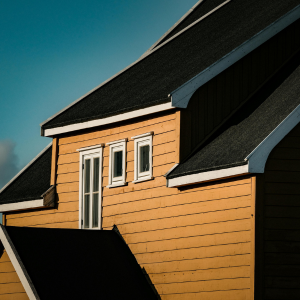
Most buyers can’t tell a 12-year-old shingle roof from a 22-year-old one. They notice color, texture, and the line of the ridge. Dark algae streaking down the north slope looks like neglect, even when the shingles have a decade left. A sagging ridge looks structural, and that scares people off fast.
What does your ridge look like from across the street? Go stand on the far curb and look back for a minute. That’s the view in the listing photos. More and more, it’s a drone shot that puts every mismatched patch on display.
Mismatched repairs do more damage than honest wear. Three-tab squares tucked into an architectural shingle field tell a buyer money’s been tight. So do curled edges, bald spots where granules have washed off, and rusted flashing at the chimney. I spot these from a phone screen before anyone books a showing.
Clean gutters and a moss-free surface go further than sellers expect for the cost. A soft wash and a few matching replacement shingles can move a roof from “worrying” to “fine” for a few hundred dollars.
Wood shingle roofs are their own conversation. In fire-prone counties, insurance can be hard to find, so buyers ask about roofing material before they ask about square footage. If you’ve got cedar shingles in a high-risk area, talk to an agent who’s sold homes on your street in the past year. Do that before you decide replacement is optional.
What Does the Inspection Report Really Tell Buyers?
Inspectors rarely write “needs a new roof.” They describe condition, note what they couldn’t reach, and suggest a specialist when something’s past their scope. The report says something closer to “moderate granule loss observed, evidence of prior repair at the south valley, remaining service life limited.” That line doesn’t name a price, and that’s the whole problem.
Buyers fill the blank with the scariest number they’ve heard. Their agent fills it with a bid from a contractor who’d love to sell a full tear-off. A $2,800 flashing and valley repair turns into a $25,000 concession request in one email thread.
Getting a licensed roofing contractor up there before you list changes that. You hand buyers a written scope with a real number instead of letting them invent one. A roof certification often runs $75 to $200, which is a small cost next to a guess.
Inspectors open the attic hatch too, and they know what to look for. Water stains on the decking, daylight at the sheathing seams, flattened insulation under a leak path: none of it shows from the driveway, and all of it lands in the report. If you already know a stain is up there, disclose it. Buyers forgive known problems far more easily than ones they find on their own.
Second layers matter as well. If someone shingled over the original roof years ago, the inspector will note it. Under the International Building Code, a roof that already has two layers can’t take a third, so the next re-roof means a tear-off down to the deck. Sellers who don’t know their layer count get blindsided in negotiations. A contractor can check at the drip edge or from the attic in a few minutes.
Is a Partial Roof Fix the Smarter Middle Ground?
A seller I worked with had one bad slope. It faced south, took the sun all day, and had shingles curling at every edge. The other three planes had years left, so she replaced that one section and sold two weeks after listing.
Agents underuse that move. Roofs don’t fail evenly. Buyers react to what they can see and what the inspector flags, and nobody checks whether every plane has the same install date.
Targeted work covers a lot: new flashing at the chimney and skylights, a valley replacement, decking repair under a soft spot, a ridge vent fix. Installing asphalt shingles ran about $5.21 to $6.82 per square foot nationally in September 2026, according to Homewyse. Redoing 400 square feet instead of 2,400 is a very different cost.
Two cautions come with this. Matching shingles on a 15-year-old roof is hard, and a bright new patch beside faded field shingles can look worse than the wear did. Ask your contractor to carry the new section to a natural break, like a full plane or a hip, so it looks planned.
Code is the other thing to watch. Older model codes let you reroof up to 25 percent of a roof without meeting current standards, and the NRCA notes that exemption left the IBC and IRC in 2003. Florida kept its own version, the well-known “25 percent rule,” and eased it in 2022 for roofs built to the 2007 code or later. Small repairs in matching material are usually treated differently from a reroof. Your local permit office can tell you which code edition it enforces and whether local amendments apply.
Buyers also like seeing repair receipts at the closing table. Keep the invoice, the warranty papers, and a few photos of the work in progress.
Can a Roof Replacement Give You Leverage in Negotiations?
Sellers put on a new roof picturing a buyer who pays full asking and asks for nothing. Then the offer comes in at least $9,000 under asking, because the water heater’s from 2009 and the buyer wants closing costs covered. The roof bought goodwill. It didn’t buy immunity. If you’d rather skip that second round of haggling, you can sell your house as-is in Collierville, Tennessee, and leave the water heater where it is.
Leverage comes from scarcity and from a buyer’s fear of losing the house. A recent roof helps only when the competing listings nearby have older ones. Pull up three or four comparable properties and check their roof age. If half the block re-roofed after the last hail storm, yours is table stakes and buys you no extra room.
A new roof does hold the line on repair credits. Buyers negotiate twice, once on price and again after the inspection comes back. Taking the biggest line item out of that second round protects real money, especially with today’s supply giving buyers room to push.
It can work the other way too. Price the house fairly for its roof condition, say so in the listing, and you draw buyers who’ve already accepted the trade. Those sales hold together. The ones that fall apart are usually the ones where the seller hoped nobody would look up.
A seller in Southaven, Mississippi, called me on a Tuesday last spring. She’d just moved her father into assisted living. His roof had two layers, and a chest freezer was still humming in the garage, full of venison from three seasons back. She didn’t want a contractor or a listing, and she didn’t want a stranger’s opinion about shingles. She wanted the house handled while she was handling him. We closed in under three weeks, and she took the freezer.
If that sounds closer to your situation than a roofing bid does, Ready Door Homes buys houses in as-is condition, roof included.
Frequently Asked Questions
What Shouldn’t You Fix Before Selling Your House?
Skip cosmetic upgrades that reflect your taste instead of your buyer’s, like new countertops, bold paint, or a landscaping overhaul. Half-done projects are the worst, since a half-remodeled bathroom reads as unfinished work. Fix safety items, active leaks, and anything that will block financing. Leave the rest for the buyer to choose.
Does a 20-Year-Old Roof Have to Be Replaced?
Not automatically. Asphalt shingle roofs usually last somewhere between 15 and 30 years, depending on climate, attic ventilation, and how well the original install went. A 20-year-old roof in a mild climate with good airflow can have years left. The same roof in hot desert sun or after a couple of hail seasons may be done sooner. What matters for a sale is condition: granule loss, curling edges, soft decking, and active leaks. A roofer can tell you which category yours falls into, and many will look for free.
Will a Buyer’s Lender Refuse to Finance a House with an Old Roof?
Conventional lenders mostly care about leaks and structural soundness more than age. FHA is stricter. Its rules call for a roof that keeps moisture out and has at least two years of remaining physical life. VA doesn’t set an age limit, though the roof has to keep water out and offer reasonable future use. If an appraiser flags the roof, the loan usually can’t close until it’s repaired or cleared, and sellers often pay that bill. A cash buyer doesn’t bring those rules, which is why as-is sales often move faster when the roof is the sticking point.
How Much Value Does a New Roof Actually Add to a Home Sale?
It adds value, though you’ll rarely get the full cost back. The return is better when the old roof was failing, because you’re removing a reason buyers walk away. It’s weaker when the old roof was just aging, since buyers seldom pay extra for new over functional.
Can You Sell a House with a Leaking Roof?
Yes, though fewer buyers will be in the running. Disclose the leak and expect financed buyers to hesitate or ask for credits. Investors and cash buyers will price the leak into their offer without much drama. Patching an active leak before listing is usually worth it even if you skip a full replacement. Water stains on a ceiling make buyers imagine something far worse than what’s going on above them.
If you’re weighing a roofing bid against just being done with the house, it costs nothing to see what an as-is offer looks like before you sign with a contractor. Reach out when you’re ready. If the numbers don’t work for you, no hard feelings. Everything you need to get in touch is on our contact us page.