
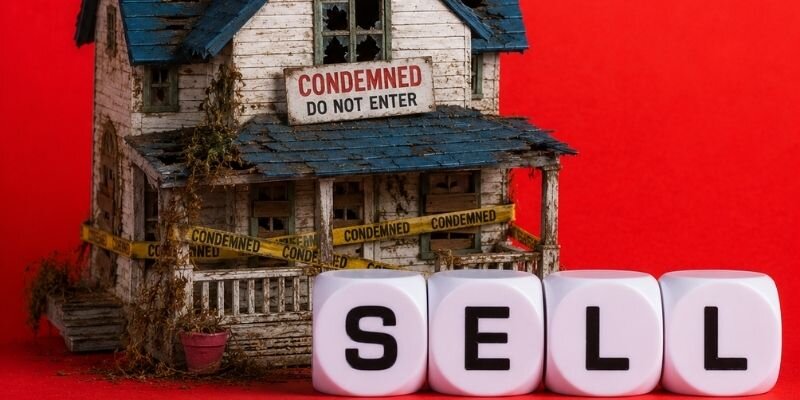
A condemned property notice taped to the front door feels like the floor dropping out, especially when you’re already dealing with an estate, a family situation, or mounting city fines. That notice makes everything feel urgent. Even so, learning how to sell a condemned house in Tennessee starts with one fact: you still own the property, and you can still sell it.
Can You Sell a Condemned House in Tennessee?
The homeowners who get stuck are almost always the ones who waited too long to look into it. Every week of inaction costs something: accruing fines, rising property tax debt, and a demolition order creeping closer to execution. Property doesn’t fix itself. Liens don’t disappear.
Sellers in Bartlett, South Memphis, and rural Fayette County all share the same fear when this situation first hits: that a condemned status makes their property worthless, or worse, unsellable. Neither turns out to be true. The market for distressed real estate in Tennessee is active, and the companies that buy houses for cash in Tennessee move quickly on condemned properties regardless of condition.
Back in March, I sat across from the Hayes family in Bartlett. Their father had just moved into assisted living, and the 1960s ranch he’d lived in for decades had been flagged by city code enforcement for structural failure along the rear addition and a compromised electrical panel. We closed on a Wednesday. They didn’t clean out a single box.
That story is typical, not exceptional. The goal of this article is to walk you through how condemnation works in Tennessee, what your realistic options are, and how to sell without making a single repair if that’s the path that makes sense for you.
What Does Condemned Mean for a House in Tennessee?
Two types of condemnation exist, and confusing them leads sellers to make bad decisions.
The first, and by far the most common, is a code enforcement action: a local housing inspector has determined that the property poses safety or health hazards serious enough to prohibit occupancy. The second is a government taking property under eminent domain, which follows an entirely different legal process under Tennessee statutes and is not what most homeowners are dealing with.
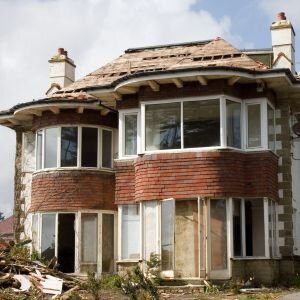
In a code enforcement condemnation, the local government has found the property unsafe due to structural, electrical, plumbing, or environmental hazards. That list is broad: a collapsed roof, mold throughout the HVAC system, raw sewage issues, fire damage to load-bearing walls, or severe hoarding conditions that block egress. Memphis, Knoxville, Chattanooga, and Nashville each run their own code enforcement divisions, so violation types and timelines vary by city.
It’s worth knowing that not all condemned properties are in the same category. Some carry a single fixable violation, a compromised electrical panel or a failed septic system, while others have accumulated years of deferred maintenance across every major system. The severity of the violations shapes both the timeline you’re working with and the offers you’ll receive. A property condemned for a single structural issue is a very different negotiation than one flagged for structural failure, hazardous materials, and fire damage combined.
What’s consistent statewide is the notice process. Once a house is tagged as condemned, the owner is typically given 30 to 60 days to make necessary repairs, request a re-inspection, and apply for required permits. That window moves fast. Owners who don’t respond find themselves facing escalating fines or a mandatory housing board hearing.
Condemnation does not transfer ownership. Your title remains yours, along with all the rights and obligations that come with it, including the full right to sell.
How Tennessee Condemnation Codes and Violations Affect a Sale
If you ignore a condemnation order in Nashville, the city can demolish the structure and bill you for the cost. In Memphis, demolition costs typically range from $8,600 to $18,000, depending on the size of the structure, with larger homes running higher. That demolition bill attaches as a lien to the land itself, even after the structure is gone. Sellers often assume the worst outcome is just fines. Nashville’s environmental court can also impose up to $50 per day per violation, a cost that compounds fast on an unresolved property.
The City of Memphis has one of the most active code enforcement programs in the state, with thousands of open violation cases at any given time. Properties in neighborhoods like Frayser or South Parkway East can move through the demolition pipeline faster than owners expect, particularly when the structure has been vacant for an extended period. Knoxville runs a similar program through its Neighborhood Codes Enforcement office, and both cities have mechanisms to escalate cases that go unresponded to. Waiting does not make the problem smaller.
Tennessee requires sellers to complete a Residential Property Condition Disclosure form covering structural, mechanical, and environmental conditions. You must disclose the condemnation status and any known violations in any sale contract. Attempting to hide a condemnation order creates legal exposure that no sale price is worth.
Traditional lenders won’t finance a condemned property. That eliminates most retail buyers from the outset and leaves two realistic paths:
- Repair it enough to clear the condemnation status, often six figures depending on the violations cited.
- Sell as-is to a cash buyer who purchases in the current condition and takes on the code violations at closing.
How to Sell a Condemned House in Tennessee As-Is

Selling as-is is entirely legal in Tennessee, as long as you properly disclose the condemnation status. Once the sale closes and ownership transfers, the buyer takes on responsibility for all code violations and condemnation issues, and that transfer of liability is one of the most underappreciated benefits of moving quickly.
Some sellers worry that disclosing a condemnation order will kill the sale. With a retail buyer using financing, it likely would. With a cash buyer who specializes in distressed properties, disclosure is simply part of the conversation. They’ve seen condemned properties before. What matters to them is that the disclosure is complete and accurate, and that the title can transfer cleanly.
Your contract should explicitly state who is responsible for the violations after closing. A real estate attorney familiar with Tennessee property law can make sure that the language protects you once the deed transfers. It’s worth the cost of a one-hour consultation before you sign anything.
One caution: sellers sometimes skip attorney review because they assume cash sales are too informal for legal paperwork. That’s exactly backward. A cash sale still needs a proper contract, a title search, and a clean chain of ownership.
What Cash Buyers Look for in a Condemned House in Tennessee
A seller in Cordova called me after receiving a city notice about a rental she’d held for 12 years. The tenant had left, the pipes had frozen over winter, and by spring, the kitchen floor joists had rotted through. She had a Monday morning deadline on her first code enforcement hearing.
Cash buyers deal with situations like this constantly. What they’re evaluating is not the house in its current condition. It’s what the property can become. They run renovation cost estimates, look at what comparable repaired homes sell for nearby, and back-calculate an offer that leaves enough margin to do the work.
The calculation typically works like this: a buyer estimates the after-repair value of the property, subtracts their projected renovation or demolition costs, deducts their target margin, and that becomes their offer. Understanding this math helps you evaluate whether an offer is reasonable. A low offer on a property with heavy violations isn’t necessarily a lowball, it may reflect an accurate read of the rehab costs. A low offer on a structurally sound property in a strong neighborhood is worth pushing back on.
They also look at the title. Existing liens, tax arrears, and prior code violation fines all factor into the offer or get addressed at closing. A title with ten years of unpaid property taxes attached is a larger discount driver than the physical condition of the structure. Pull your title report early so you know what’s on it.
The condition of the lot matters too: size, zoning, flood zone status, and any historic overlay. Buyers are pricing the land’s potential, not the building’s current state, which is why owners who need to sell their house fast in Memphis, TN, still receive competitive offers even on fully condemned structures. Suburban lots hold value the same way, so we buy houses in Bartlett and work as cash home buyers in Collierville on identical as-is terms.
How to Prepare to Sell a Condemned House in Tennessee Without Repairs
You’re not preparing the house for anyone. You’re preparing the information.
Gather the following before reaching out to buyers:

- The condemnation notice and any follow-up correspondence from the city or county
- Your property tax account statement showing what’s currently owed
- A title search from a local title company (this shows liens, judgments, and any clouds on ownership)
- Any permits or contractor estimates from prior repair attempts, since even partial records reduce a buyer’s uncertainty
Having this paperwork ready signals to buyers that you’re a serious seller, which tends to produce faster and more competitive offers. Buyers who work in the distressed market evaluate dozens of properties and move on quickly from sellers who are disorganized or hard to communicate with. The sellers who achieve the best outcomes are those who make it easy to say yes to a transaction.
Pricing the property yourself is not worth the effort. Cash buyers will give you their number based on their own analysis. Your job is to get multiple offers so you can compare. Contacting two or three buyers and letting them compete is the single most effective way to get closer to fair market value for a condemned property.
Once you’ve accepted an offer, a cash sale typically closes within 2 to 3 weeks. Some close faster, which matters when a code enforcement deadline is approaching.
Why a Direct Cash Sale Works Better Than Listing a Condemned House in Tennessee
Retail buyers using mortgage financing cannot purchase a condemned property. Any agent who suggests listing it on the MLS without addressing that reality first is setting you up for canceled contracts and wasted weeks.
Listing also means agent commissions in the range of five to six percent, closing costs, and potential seller concessions after inspection. On a $150,000 land-value sale, that’s easily $12,000 to $15,000 out of your pocket before you’ve addressed a single lien.
| Cash sale | Traditional listing | |
|---|---|---|
| Buyer financing required | No | Yes, condemned properties are ineligible |
| Repairs before closing | None | Typically required to clear condemnation |
| Agent commission | None | 5 to 6% |
| Closing timeline | 2 to 3 weeks | 60 to 90+ days, if it closes at all |
| Who handles code violations | Buyer | Seller, before or during sale |
| Disclosure required | Yes | Yes |
| Risk of canceled contract | Low | High |
A direct cash sale eliminates the commissions, shortens the timeline, and transfers the repair obligation to the buyer entirely. You don’t need curb appeal. You don’t need to stage or clean anything out. The property value is what it is, and a cash buyer’s offer reflects that.
What to Expect During the Sale Process for a Condemned Property in Tennessee
After you accept a cash offer, the buyer orders a title search. This is standard and takes about a week. The title company will flag any liens, tax debt, or other issues that need resolution at closing. Most of those get paid from your sale proceeds at settlement rather than out of pocket beforehand.
Between the signed contract and the closing date, you’ll typically need to sign a few standard documents: the purchase and sale agreement, the Tennessee Residential Property Condition Disclosure, and the closing statement that itemizes how the proceeds are distributed. If there are outstanding liens, the title company coordinates payoffs directly with the lienholders. You don’t need to manage that process yourself. By the time you sit down at the closing table, the heavy lifting is already done.
Caroline Tran came to us during a divorce in Cordova. She and her ex-husband co-owned a rental off Germantown Parkway that had been condemned after a kitchen fire left the structure uninhabitable. Neither party wanted the liability of carrying it through a contested rehab. She called on a Thursday; we had a signed contract by that weekend. The garage still had his tools in it when we closed. Neither of them had to set foot in it again.
That’s the experience most sellers want: handled, clean, final. After closing, the deed transfers, the liens get paid, and your legal exposure to that property ends completely.
Frequently Asked Questions
Can you legally sell a condemned house?
Yes, as long as you fully disclose the condemnation status and any known violations to your buyer, and your contract clearly assigns responsibility for code violations to the buyer after closing. Most cash buyers already expect and accept this as part of their offer.
How much is a condemned house worth?
Value depends primarily on the land and what a buyer can build or rehab there. A condemned structure in a high-demand neighborhood may still carry significant land value even if the building needs to come down entirely. Expect offers to reflect the estimated cost of repairs or demolition, any outstanding liens, and what comparable renovated properties sell for nearby.
What’s the difference between uninhabitable and condemned?
An uninhabitable property fails to meet livable conditions, but that determination can be informal, made by a landlord or tenant rather than a government official. Condemnation is a formal legal action by a government authority resulting in an official order, posted notice, and legal record. Every condemned property is uninhabitable, but not every uninhabitable property has been formally condemned. The formal status is what triggers legal timelines, fines, and demolition proceedings.
When a house is condemned, who owns it?
You do. Code enforcement condemnation does not transfer ownership to the city or county. You remain the titleholder with all rights and obligations, including the right to sell. Ownership only changes without your consent under eminent domain, a separate legal process with its own court procedures and compensation requirements under Tennessee law.
If you have a condemned property in Tennessee and you’re weighing your options, the most useful thing you can do right now is get a written contractor estimate for the repairs and a title report showing what’s currently on the property. Those two numbers tell you whether the repair path is viable or whether a cash sale is the cleaner move. Feel free to contact us with any questions before you decide.
If you want a no-obligation cash offer to compare against, Ready Door Homes buys condemned and distressed properties across Tennessee, from Shelby County to Fayette County, and can walk you through exactly what a clean, legal transaction looks like before you commit to anything.
Helpful Tennessee Blog Articles
- How To Sell A Condemned House In Tennessee Fast And Legally
- What Taxes Do I Have to Pay When I Sell My House in Tennessee
- How Long Can A Seller Stay In The House After Closing
- Who Pays For Home Appraisals And Inspections When Buying A House
- Can You Sell a House As-Is Without Inspection in Tennessee
- What Every Homeowner Should Know About Deeds And Titles
- How To Sell Your Rental Property Without Paying Taxes
- How Much Do Realtors Charge To Sell A House In Tennessee
- How Long Does It Take to Sell a House in Tennessee
- How to Short Sell My House in Tennessee