
A deed gets signed at a kitchen table in twenty minutes, then sits in a drawer for eleven years. I’ve opened that drawer. Someone’s name never made it onto the property title, and a refinance or a probate case dragged the mess back into daylight. Quitclaiming is one of the simplest tools in real estate. Simple is what trips people up. Knowing how to file a quitclaim deed in Tennessee comes down to the parts that carry legal weight: the acknowledgment, the sworn statement of consideration, and recording the document with the right office.
What Is a Quitclaim Deed Under Tennessee Law?
Before: two names on the title after a divorce, one ex-spouse still paying to live there. After: one name on record, a filed quitclaim deed, and a lender that finally knows who holds what.
A quitclaim deed hands over whatever ownership interest the grantor happens to have. That’s the whole promise, and it isn’t much of one, since no warranty rides along. If the grantor held a shaky one-third interest clouded by an old lien, the grantee takes a shaky one-third interest clouded by that same old lien.
The official term here is a quitclaim deed. A deed that carries no covenants also goes by non-warranty deed in plenty of places, and that name describes the thing well enough. The document is short, though Tennessee asks for more on its face than most states do. You’ll list names and addresses of both parties, the county, the parcel ID, the sworn consideration, and the legal description. The preparer’s name goes on as well, along with a derivation clause. Pull that description off the recorded deed, never off a tax bill. Tax records summarize. They don’t convey.
That derivation clause trips up out-of-state filers more than anything else here. Under T.C.A. § 66-24-110, the deed has to name the instrument from which the grantor’s own title came, book and page included. Leave it off, and the register can turn you away at the counter.
A retired couple in Millington called me on a Thursday a while back. Three months behind on the mortgage, the auction date is already circled. The title showed a long-dead brother still sitting on the deed from a quitclaim transfer no one finished in the nineties. I’ve run into that mess more than once in old family transfers. A pontoon boat filled their garage, and the bigger problem filled their title report.
One thing a quitclaim never does: touch the loan. Deeding your interest away leaves your signature on the note right where it was.
A quitclaim deed moved the deed, but your name stayed on the note, and selling is what gets you off that loan. Here’s how Ready Door Homes can help if you want out sooner than a listing allows.
How Is a Tennessee Quitclaim Deed Different From a Warranty Deed?
“Can’t I just quitclaim the house to my buyer and save the lawyer’s fee?”
Please don’t. A warranty deed carries covenants. The grantor stands behind the title, and the grantee can come after them if it turns out flawed. A quitclaim carries no backstop at all. Buyers with financing won’t take one, and title insurers get uncomfortable fast.

Price is where the difference bites. Tennessee’s statewide median sale price hit $378,325 in August 2026, up 0.9% from a year earlier, according to Redfin’s state market data. Nobody hands over that kind of money for a document that guarantees nothing about ownership rights.
At the register’s counter, the two look the same. Both get recorded the same way. Both need the same sworn oath of value. The whole difference lies in what the grantor promises, which is why quitclaim deeds cost less in legal fees and carry more risk for whoever receives them. If that split still feels blurry, here’s what every homeowner should know about deeds and titles before either document gets signed.
As a buyer, I’ll take a quick claim deed in two situations. One, I’m clearing a stray heir’s interest off a title I already control. Two, a seller’s interest is so tangled that no honest warranty could be given. Otherwise, a general warranty deed earns every dollar of the attorney’s time.
Financed buyers walk away from a quitclaim, but a cash buyer doesn’t, so contact Ready Door Homes if a clouded title is the only thing holding up your sale.
When Should You Use a Quitclaim Deed in Tennessee?
Quitclaim deeds belong between people who already trust each other. Almost nowhere else.
A wedding often prompts spouses to add each other to the deed. A divorce takes one of them off, usually with the decree spelling out who signs what over and when. Parents move a house into a revocable living trust so beneficiaries skip probate later, and the trust takes title by deed. Heirs settling an estate use quitclaiming to pull fractional interests into one owner’s hands. That only works once the estate has cleared court, and selling a probate house in Tennessee runs on its own timeline.
Clerical fixes are another honest use. A misspelled surname, a middle initial that vanished, a married name no one bothered to update. A corrective quitclaim cleans all of that up for the cost of recording.
Would you loan this person your truck for a month without a text confirming it? That kind of conveyance assumes about that much trust.
Investors also use them to shift a property into an LLC. Talk to the lender first. Most mortgages carry a due-on-sale clause, and a change of owner can give the lender the right to call the balance. Banks rarely pull that trigger on an intra-family transfer, though rarely isn’t never. One call to the loan servicer beats a surprise letter.
One more fair use: releasing a claim you aren’t sure you hold. Someone who might own a share through an old marriage or an unprobated estate can sign that possibility away, and the title clears.
What Risks Come with Signing a Tennessee Quitclaim Deed?
“If my name comes off the deed, I’m off the mortgage.” That sentence has cost homeowners more money than almost anything else I hear. Ownership and debt sit in separate boxes. The lender holds a signed note, and deeding your interest away doesn’t release you from it. Your credit still absorbs every late payment on a house you no longer own.
Liens travel with the property, too. Back taxes, judgment liens, contractor liens, and HOA assessments. The grantee inherits all of it with zero recourse against the grantor.
Title insurance is the next snag, because a quitclaim sitting in the chain of ownership can make a future underwriter nervous, especially one recorded without a lawyer’s review.
Tax relief is quietly at stake as well. Tennessee has no blanket homestead exemption on property taxes, so what’s at risk is the state Property Tax Relief Program, which reimburses low-income elderly and disabled homeowners, plus disabled veterans. That benefit follows the owner of record who lives there, not the parcel. Your county trustee is the only reliable place to confirm what has to be re-filed. Ask before you sign. Not in the fall, after a bigger bill lands.
Skip the quitclaim for arm’s-length sales, for any transfer with a lender or title company involved, and any time the parties don’t fully trust each other. Creditors of the grantor can challenge transfers made while debts sit unpaid. A deed signed to hide a property from a judgment tends to create a second lawsuit instead of a shield.
Back taxes, a judgment lien, an HOA balance nobody’s touched in years, investor home buyers in Tennessee and cash home buyers in Cordova, TN will take the house with all of it attached and settle what’s owed out of the sale.
What Are the Tax Implications of a Quitclaim Deed in Tennessee?
Tennessee’s real estate transfer tax runs 37 cents per $100 of value or consideration, which works out to $3.70 per $1,000, under T.C.A. § 67-4-409. The grantee owes it here, which flips the usual assumption that the grantor pays.
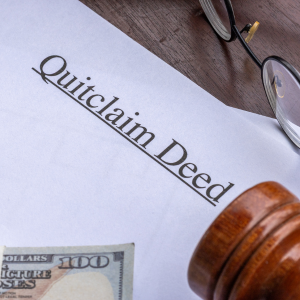
These deeds get their own wrinkle. The tax normally rides on value or consideration, whichever is greater, but on a quitclaim, it follows the actual consideration given. Gifts and family transfers often owe little as a result. You still swear the oath of consideration either way, since that sworn figure is what the register taxes.
Federal taxes are the trickier half. Handing a house to a child for free can be a reportable gift, and the recipient just steps into your cost basis instead of getting a fresh one. That one detail has produced some ugly capital gains bills years later. A CPA earns their fee here.
Sell instead of gifting, and the picture changes. IRS Publication 523 lets a single filer exclude up to $250,000 of gain on a main home, and married couples filing jointly up to $500,000. You need to have owned and lived in the place for at least two of the five years before the sale. Spouses and ex-spouses moving property as part of a divorce get their own treatment under that guidance.
Tennessee takes no second bite. The Hall income tax was repealed for tax years beginning January 1, 2021, so any gain is a federal matter and nothing more. Property taxes still deserve a look, since a change in recorded owner can trigger reassessment depending on how your county handles it.
How Do You File a Quitclaim Deed with a Tennessee Register of Deeds?
An unrecorded deed is worth less than the paper. Under T.C.A. § 66-26-103, an instrument that never gets registered is null and void as to the creditors of the maker and to bona fide purchasers without notice of it.
The signing rules here are looser than most people expect. Under T.C.A. § 66-24-101, the grantor’s signature has to be acknowledged before a notary, or else proved by two witnesses signing under oath. One notary is the normal route. Tennessee doesn’t demand a second witness at the signing the way some neighboring states do, though a witness who signs anyway does no harm.
Next comes the oath of consideration, sworn right on the deed. The wording tracks T.C.A. § 67-4-409: I hereby swear that the actual consideration or value, whichever is greater, for this transfer is a stated dollar figure. A notary or the register can administer it.
You’ll record it with the Register of Deeds in the county where the property sits, per T.C.A. § 66-24-103. Under T.C.A. § 8-21-1001, the fee runs $10 for the first two pages, $5 for each page after that, and a $2 data processing charge, with the transfer tax collected on top.
People underestimate timing. Record the same week you sign, keep a stamped copy, and send one to whoever handles your insurance and your tax bills.
You can spend a Thursday at the register’s counter, or you can sell to a company that buys homes in Memphis and nearby Tennessee cities and let the closing handle the deed, the recording, and the transfer tax.
Where Can You Get Help with a Quitclaim Deed in Tennessee?
That leaves the question of who should draft the thing. Tennessee doesn’t force you to hire a lawyer to close, which is why title companies and licensed settlement agents run most residential real estate closings here. That freedom cuts both ways. A settlement agent can record your deed, but picking the deed type is legal work, and only your own attorney can do it.
Bring a real estate attorney in for anything touching a trust, an estate, a divorce decree, or a mortgage still in play. An hour of counsel costs less than unwinding a bad conveyance.
Register’s staff can’t help you here. They record documents, and they’re barred from giving legal advice, so none of them will tell you whether a deed does what you want.
Sometimes the deed isn’t the answer at all. If the real issue is that you no longer want the house, selling beats deeding it to a relative who doesn’t want it either. That’s where a direct buyer like Ready Door Homes fits: a cash offer, an as-is sale, and a clean warranty deed at closing instead of a homemade document. Shelby County’s median sale price sat at $259,240 in July 2026, down 2.4% year over year, so equity often runs larger than sellers assume when they start hunting for shortcuts. The same math holds out in the suburbs, and owners who sell their house fast in Bartlett, TN often keep more than the deed shortcut would have saved them.
A landlord in Cordova reached out after four years of chasing rent on a house he inherited and never wanted to manage. A motorcycle sat in the carport, and the water heater had failed twice. He told me he’d stopped opening texts from that number. We closed, he kept the equity, and no one had to draft anything at the kitchen table. That’s usually when a landlord finally exhales.
Frequently Asked Questions About Tennessee Quitclaim Deeds
Can I Prepare and File a Tennessee Quitclaim Deed Myself?
You can, and plenty of people do, for simple family transfers. The risk isn’t the form. It’s the legal description, the derivation clause, the witness and notary rules, and knowing whether the transfer creates a tax or lender problem. One practical catch: Tennessee limits electronic submission to attorneys, banks, regulated lenders, licensed title insurers, and government agencies, so an individual walks it into the county Register of Deeds or mails it.
What Are the Real Downsides of a Tennessee Quick Claim Deed?
The grantee gets no promises at all about the title, so any lien, easement, or competing claim comes along for the ride. The grantor stays on the mortgage unless the loan is refinanced or paid off. Insurers and lenders treat these deeds with suspicion, which can complicate a later sale or refinance.
Who Pays Tennessee Taxes After a Quitclaim Transfer?
The new property owner picks up the property tax bill going forward, so make sure the county has the right mailing address on record. The transfer tax here falls on whoever receives the property, unless the parties agree otherwise in writing. Gift tax reporting and any capital gains down the road sit with the people involved, which is why the federal exclusion above matters more than the deed form itself.
How Long Does Recording Take in Tennessee?
Walk-in filings are often stamped and handed back the same day, since the county register indexes at the counter. Mailed filings depend on the county office’s backlog and can take a couple of weeks to come back. Either way, the transfer takes effect between the parties when the deed is delivered. Recording is what protects the grantee against everyone else, so don’t sit on it.
Will a Tennessee Quitclaim Deed Trigger My Due-on-sale Clause?
It can. Most mortgages let the lender call the loan due when the property changes hands, and a recorded deed is public notice that it did. The Garn-St Germain Act shields transfers to a spouse or child, and transfers into a living trust you stay the beneficiary and occupant of, on residential property with fewer than five units. A transfer to a friend, a buyer, or an LLC isn’t on that list. Call the servicer before you record if the loan is still open.
If you’re holding a property that’s turned into more headache than asset, and a deed transfer feels like the only lever left, it’s worth seeing what the straightforward version looks like first. A cash offer costs nothing to review, and no obligation comes attached to asking. Reach out when you’re ready, and we’ll walk through the numbers together.
Helpful Tennessee Blog Articles
- Can You Sell a House with a Lien in Tennessee?
- Paperwork for Selling A House By Owner in Tennessee
- Selling a House with Delinquent Property Taxes in Tennessee
- Can You Sell a House with Tenants in Tennessee
- Sell Your Water-Damaged House In Tennessee
- Sell Your House With A Reverse Mortgage In Tennessee
- Selling Your Tennessee Home With Mold Issues
- Sell Fire-damaged House in Tennessee
- Does a Seller Pay Closing Costs in Tennessee
- Can You Sell A House That Failed Inspection In Tennessee
- How To Sell A House With Foundation Issues In Tennessee
- How to File a Quitclaim Deed in Tennessee
- Selling A House That Needs Repairs In Tennessee
- Can the Seller Back Out of A Contract in Tennessee
- Can You Sell a House With Termites in Tennessee